Articles by Angus

33 articles

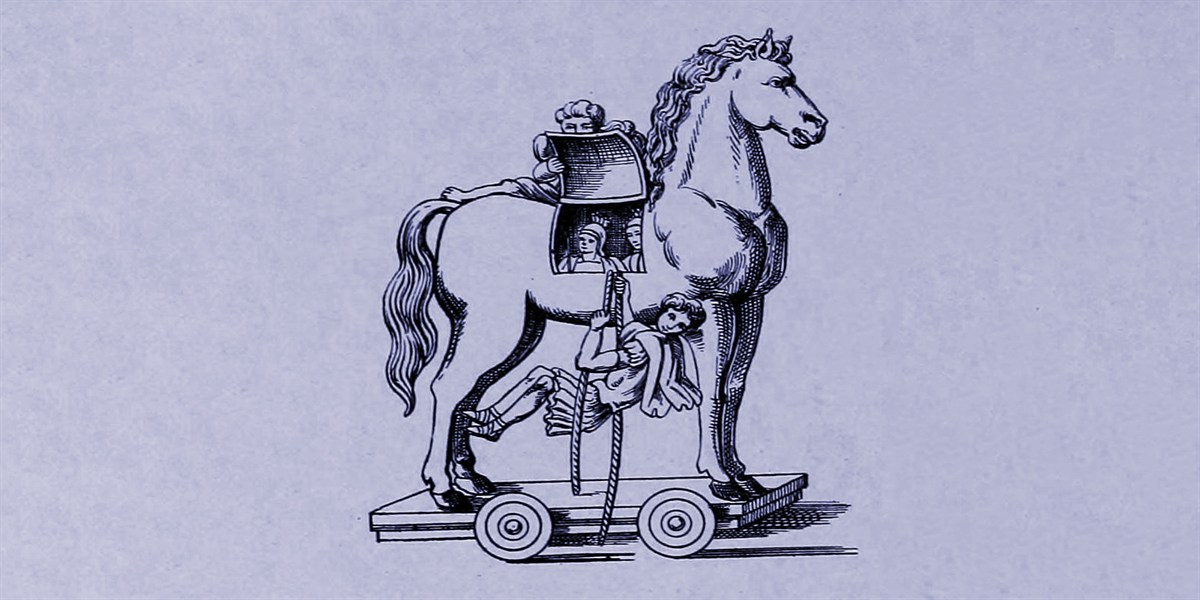
Flogging a dead horse

Flogging a dead horse

We live in a world saturated with media. It allows us to be ever more informed about the world around us, which is undeniably a good thing; but the media is a voracious beast that must be filled with constant opinion pieces, rehashed endlessly with never-ending arguments.

This is undoubtedly the case in Scotland, where the Separation question is perpetually discussed in articles which have become repetitive in the extreme and serve little more than justifying the wage of the writer. After a decade of argument, surely everything that can be written has been written on the subject. And yes, before you mention it, I understand the irony of using an opinion piece on secession to comment on other opinion pieces on secession. 

Deep dark secrets

Deep dark secrets

To those with even the most superficial understanding of Scottish politics, secrecy and cover-ups have become routine and embedded within the institutions of government and society. Within the past couple of weeks, we learned that the primary responsibility of Public Health Scotland is not, as some may have assumed, the public health of Scotland but rather the protection of SNP ministers. Furthermore, we learned that highly-touted “world-leading” policies on education, climate policy, transport and a myriad of other departments all fail, with no oversight. It’s a protection racket that’s crippling Scotland’s services, economy and reputation.

87 years of failure

87 years of failure

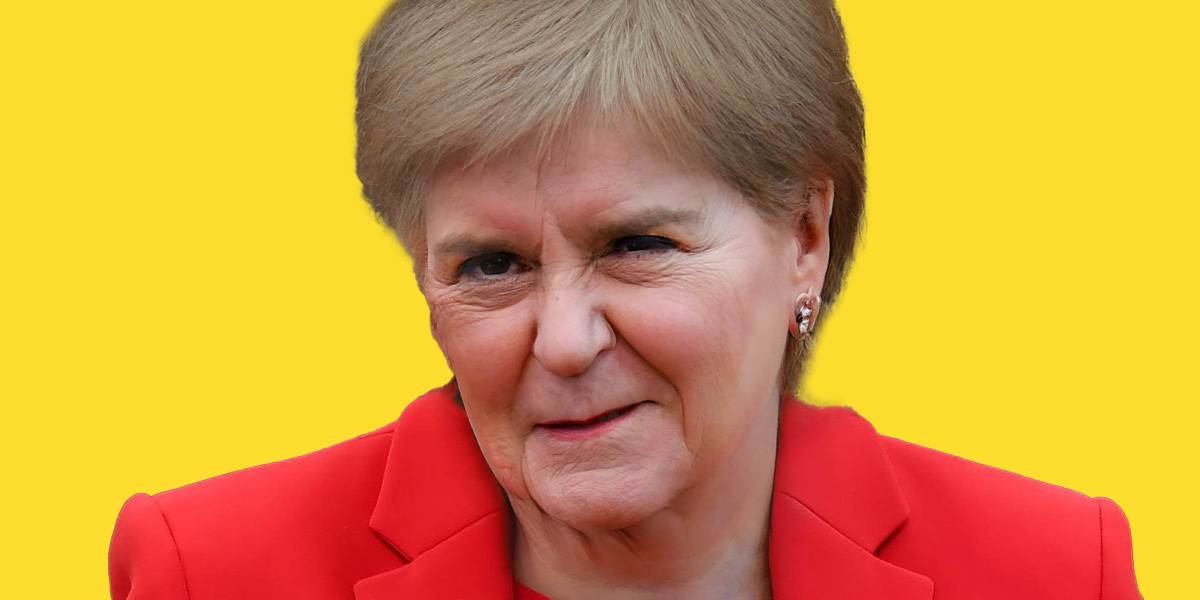
Since the founding of the SNP 87 years ago, in 1934, they have had the ambition of breaking Scotland away from the rest of the UK, even during the darkest days of the Second World War. That seems hard to believe, given that Nicola Sturgeon admitted, less than two weeks ago, that she and the SNP still have no plan for the economic consequences of what would happen after a successful vote for separation. She gave no plan or vision for how her separated Scotland would manage its affairs, other than vague and completely ludicrous statements. She has no answers on border control, currency and defence or to other quite important questions that voters might ask. 

An empty vessel

An empty vessel

It's over, finally. After a few nail-biting days, we know our election results; the SNP has gained a seat, a single extra seat snuck in on the lists. It was stressful. I spent the two days glued to my computer, sweating and fretting for the future of our country. I groaned with pain at the loss of East Lothian and Ayr; I yelled with relief at Dumbarton so loud my wife thought I was dying, and I breathed a sigh of relief at Aberdeenshire West. Exhausted but relieved and determined to claim the head of whoever started the rumour that Jackie Baillie was 25 votes short in Dumbarton, as they have taken a fair few years off my heart.

The magic is gone

The magic is gone

It has not been a good election campaign for Nicola Sturgeon and the SNP. Whilst the Conservatives continue to have a robust and loyal following, and Labour is increasing their vote share, with an energetic leader who, perhaps, became the first politician in history to dance in the street and not make a fool of himself.

The SNP magic is gone. Dogged by damaging scandals and bitter feuds over the last six months, the party desperately needed a charismatic and energetic campaign, something they currently seem incapable of. The SNP, perhaps knowing they can no longer persuade fresh voters and scared by Alex Salmond’s Alba Party, have adopted a failing hardline core voter strategy. 

On yer bike

On yer bike

With a grand fanfare, the SNP released their manifesto. Never have I seen such desperation and cynical attempt to pass off a promise that "we will try to fix what we broke" as something new and revolutionary, done in such a fundamentally self-contradictory manner.

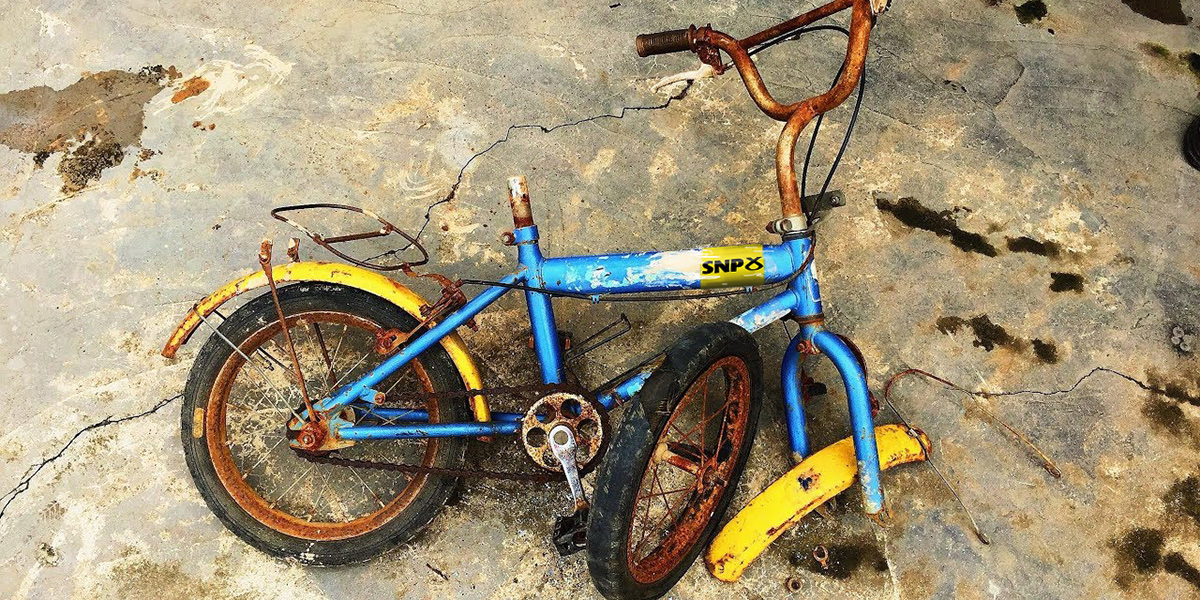
No doubt you will have heard the headline that the SNP will now give you a free bike. Well, one kid somewhere may end up getting their photo taken with a bike. A closer look at this fabulous generosity reveals a manifesto that combines the policies of Jeremy Corbyn with the outlandishness of Willie Wonka and the financial sense of Wesley Snipes. 

What about Labour?

What about Labour?

Solidarity, collective resources, having more in common than differences, and working together in a shared identity and future. This is the basis of my political beliefs and my commitment to Unionism and the British family of nations and people. 

They are powerful arguments that we, a country welded together through shared pain and happiness, are "better together". That we are even bigger, even stronger and even smarter than we could ever be apart. These arguments for the UK, are made real in furlough payments, the vaccine rollout, the British Armed Forces, the NHS, and people coming together during the pandemic. They are also arguments that Labour has used since its birth. 

A lose-lose proposition

A lose-lose proposition

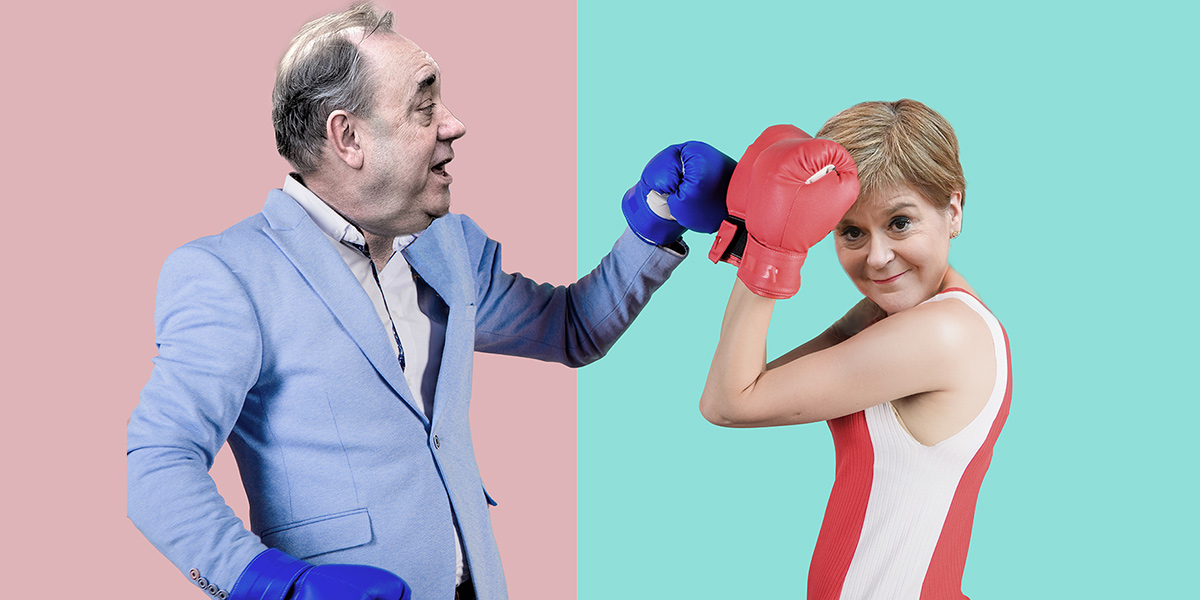
Yesterday, following the widely covered announcement of Alex Salmond's new Alba party, those who listened very closely would have heard two distinct sounds: a pained groan and a jubilant celebration. For the SNP, it was a knife thrust deep into their back, and for Unionists, it was the joy of watching an enemy devour itself. Alba's hype — that it will somehow game the system and end up with an unchallengeable majority — is the ravings of a vindictive and ego-driven man high on his own supply. 

Shoot yourself in the foot. Repeat.

Shoot yourself in the foot. Repeat.

As a young man, I was given the kind of advice you never forget, but hope you will never have to prove right. I was driving with a colleague, through a volatile part of the world, on a research trip, where landmines are very common. As we got into the truck, he turned to me and said, "Keep your feet as far apart as possible." I asked why and he replied, "That way, if we drive over a mine, you have a better chance of keeping at least one foot." I have all the flexibility of a pane of glass, but I spent the rest of the drive doing the splits. To this day, I am glad to say I still have two feet, unlike the SNP, who are shooting themselves in the foot, repeatedly.

Losing the narrative

Losing the narrative

Controlling the narrative is vital to any information, or disinformation, campaign in politics and in policy. To achieve this, a political party will use several different tactics, such as catchy slogans, announcements, cover-ups and more. All these tactics fundamentally rely on someone to convey them from the party to the public: journalists and influencers that dominate the media and the online world. 

The SNP have been able to control the narrative well, hiding their overtly divisive nationalism and objectively terrible record in government, which has allowed them to convince, or at least dissuade, criticism from most casual readers. The SNP has relied on many things to achieve this, but above all, they have relied on a sympathetic Scottish media establishment that they have, in turn, given either preferential access or outright bullied.

A matter of gravity

A matter of gravity

Time is a unique concept; it is a variable constant that has come to dominate everyone's lives on this planet. Be it by the sun's movement and the need to care for cattle or the morning commute to your 9-5 job, time impacts us all, but we experience it in different ways.

One concept is that of time dilation, where the passage of time is different in two bodies depending on the velocity at which they travel; think of the masterful movie Interstellar, where the protagonist in space experiences time much slower than his daughter on earth so that when they meet again, he seems not to have aged at all while his daughter is on her death bed from old age. As abstract as this may seem, time dilation is very relevant to politics, especially in a time where our days seem to drag on.

Clipped Wings

Clipped Wings

Comedy is at its best when it reflects tragic reality. In the tragedy of Scottish politics, the comedy is becoming absurd. The SNP, mired in a civil war that is very much the Judean People's Front against the People's Front of Judea, are now seeing the arrival of the Judean People's Front crack suicide squad, as always confident that "that will show 'em".

For years the SNP have shared, encouraged and supported Wings Over Scotland,  a Nationalist website run by Reverend Stu Campbell (residence Bath, England). It is the most viewed political website on Scottish government computers. And it is a sewer of outlandish comparisons, whataboutery and misinformation. 

Useful Idiots

Useful Idiots

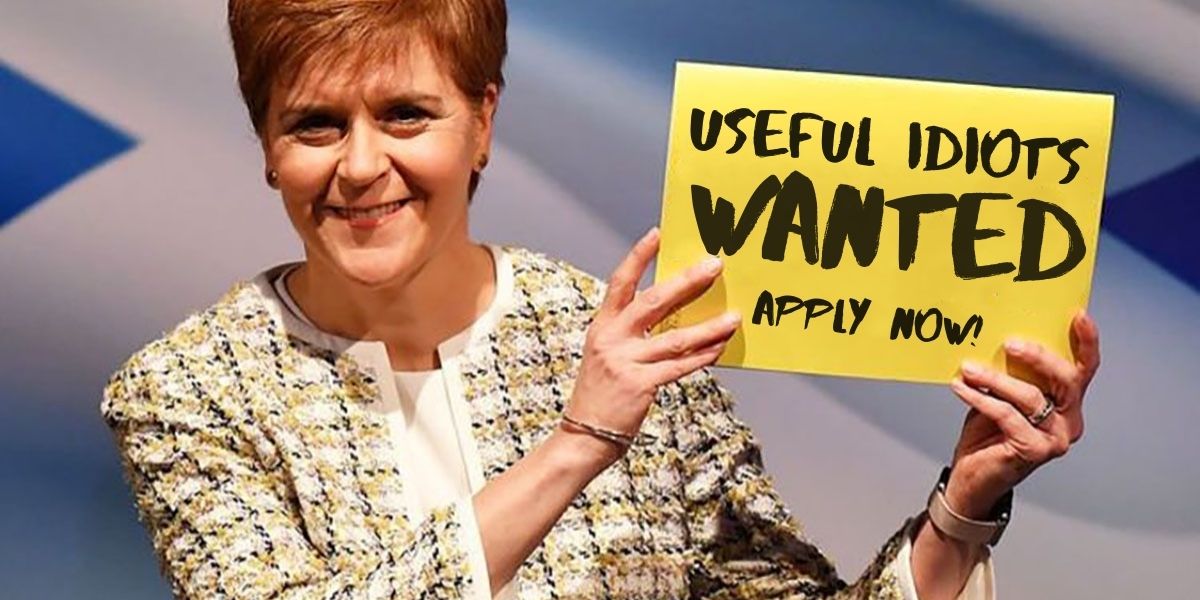
In politics, the end always justifies the means. People are nothing but tools to advance causes and ideologies. Due to this inevitable fact, political history is littered with "useful idiots", people who champion and support a cause without knowing the full story behind it.

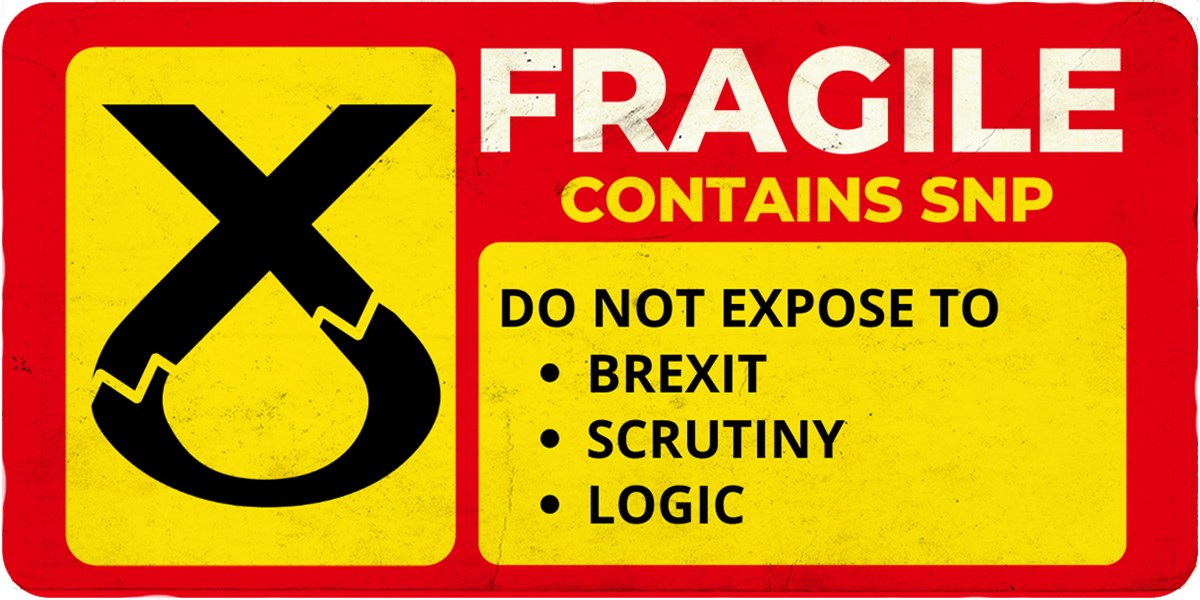
Scottish politics is no exception, and has more useful idiots than many other places. The EU used the SNP during the Brexit negotiations to leverage the British government. When they were no longer needed, the SNP found themselves abandoned by an organisation that now says Scotland cannot join the Erasmus scheme because it is "not a country". The SNP were the EU’s useful idiots.

Pull up. Pull up.

Pull up. Pull up.

Like many of us who now find ourselves locked inside for most of the day, I have been watching more movies than usual. A few nights ago, one struck me with its resonance to current Scottish politics. It was about an aircraft that, mid-flight, suffered a catastrophic malfunction to its tail assembly, causing it to roll over and enter a steep dive that inverted all of its controls; actions that would have previously lifted the nose of the aircraft would only push it down further. As the pilots fought the controls, a clear but plaintive mechanical voice repeats, "Pull up. Pull up," as the plane hurtles to the ground, as if the pilots hadn't already realised the situation which they were now powerless to stop. 

Oh, Canada!

Oh, Canada!

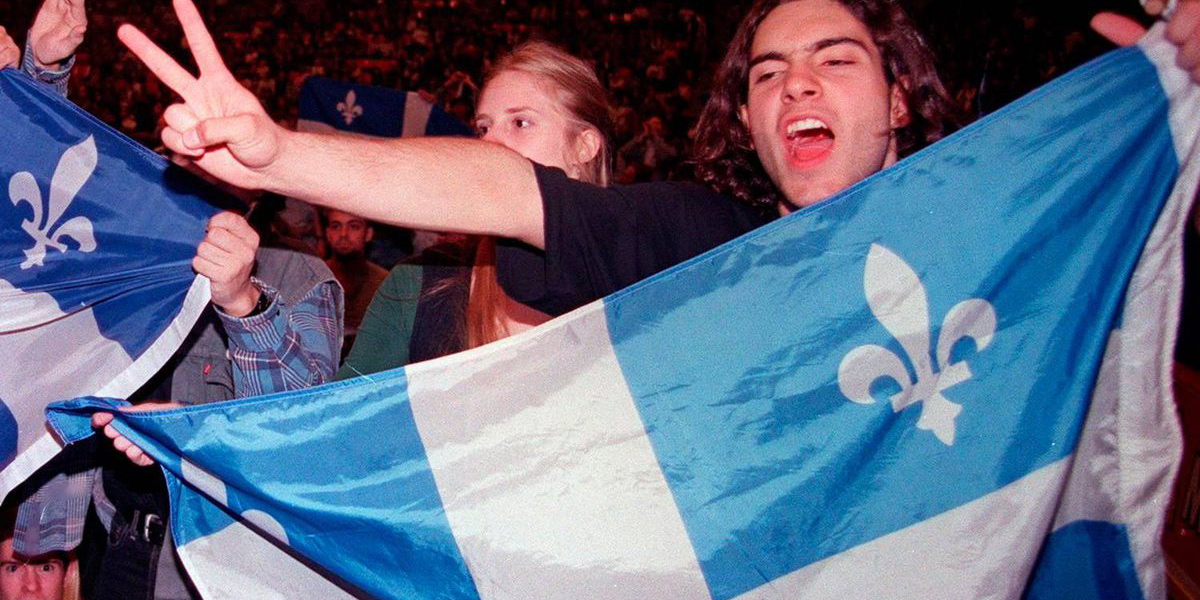
Nationalists, the world over, love to think of themselves and their causes as unique, special and a product of their own "glorious" history. Still, as always, reality is far from their fevered imaginations.

For example, Separatist claims that "independence is normal" are easily dismissed by pointing out that many of the countries they claim to admire are, in fact, political unions, often far more recent than the UK.

As time goes on, and their desperate cries for secession are revealed as a gargantuan political squirrel, I am reminded more and more of other Separatist movements that have done exactly what the SNP have done and got just about as far as the SNP will. 

Twilight of the idols

Twilight of the idols

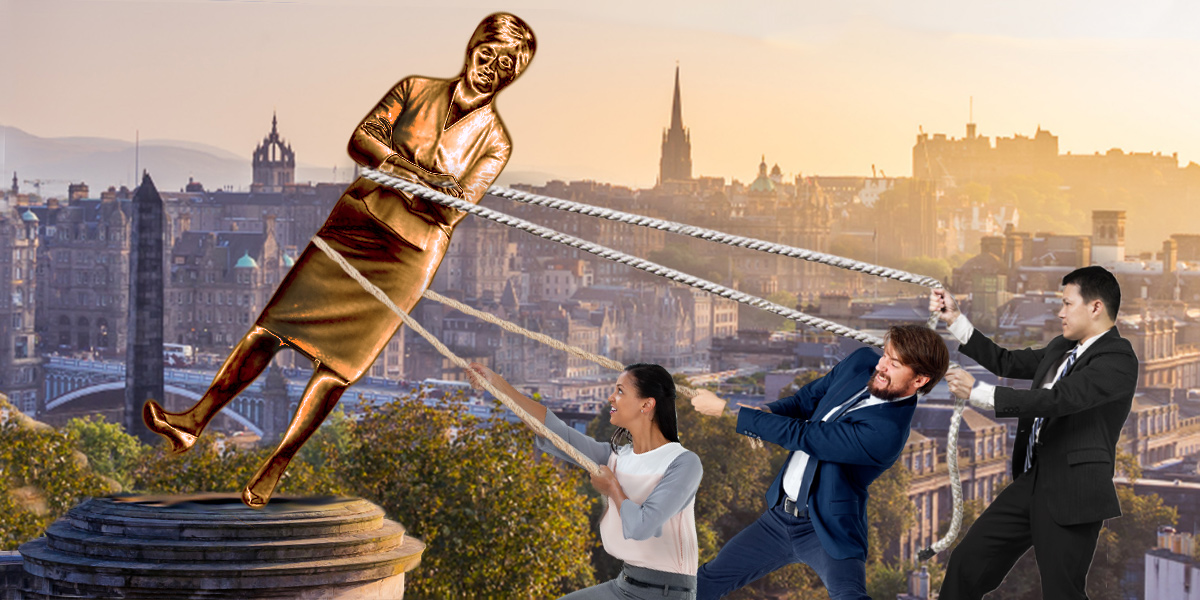
Do you remember, just a few months ago, when statues were being toppled around the world? Men who had been venerated in their time were now exposed as having profited from slavery or other ignominious acts. What was surprising was how quickly it all happened. One day nobody cared; the next statues were being pulled down. How quickly times change.

The esteemed German sociologist Max Weber says leaders, in the past or today, derive their authority from three different sources: legal authority, traditional authority, and charismatic authority. 

Let's annoy the English!

Let's annoy the English!

In a recent conversation with a dear friend of mine, politics came up. I have known this man most of my life. We have similar political perspectives. We are employed in very similar fields; in fact, this man is almost identical to me, as many have noted, except he is English and I, Scottish.

As we discussed the state of the nation, he turned to me, and with a sigh, said: "I've really had enough of all this bitterness, it may just be for the best for Scotland to go". This man is not in any way a nationalist, far from it. Still, he has become a thriving subject in the SNP's ventures into foreign policy.

A wounded and desperate party

A wounded and desperate party

A curious paradox is occurring within the SNP and the broader Separation movement. The more secession becomes impractical, and even prohibitively so, the more they are determined to talk about it. 

The SNP have failed to stop Brexit. Their alternative offers even more disruption. Their vaccination policy is lagging behind other parts of the UK, even though they claim the opposite. The COVID payouts they are responsible for have failed to materialise; the E.U. has rebutted their advances and their prized First Minister, their only person of note, is facing a civil war and a fight for her political existence.

The tide has turned

The tide has turned

Since the 2016 Brexit referendum, uncertainty and pessimism have been the SNP's strongest allies, allowing them to recover their electoral losses and encouraging them to stir up evermore grievance for their own advantage.

If they were really committed to European ideals and the common market, they would have supported Theresa May's failed deal. However, they thrive on uncertainty. They were willing to sacrifice the stability, prosperity and social well-being of Scotland, and the UK, in pursuit of that uncertainty.

From Russia, with love

From Russia, with love

For those who, unfortunately, spend their time trawling through the endless toxic abuse and conspiracy theories that make up secessionist Twitter, you may have, aside from the usual whataboutery and false comparisons, noticed a common retort to questions on how exactly a separated Scotland would establish its organs of state.

Many of these supposed “examples” reference the nations which were established after the collapse of the USSR between 1989 and 1992. A period of turmoil, economic collapse, uncertainty and even bloody warfare in many parts of the former union, the scars of which are still keenly felt in places such as Armenia, Azerbaijan or Tajikistan.  

This tower will fall

This tower will fall

I used to play Jenga as a child, and I have always remembered how often the most stable-looking tower would crumble, when a single, seemingly unimportant block was removed. That tower reminds me of the current SNP, as Nicola Sturgeon and her cronies pull the blocks out from under themselves.

In a recent contribution to the Spectator it was noted that, despite the SNP and Nicola Sturgeon's woeful handling of a myriad of domestic issues, she and her party remain popular amongst Scottish voters, seemingly defying electoral and political gravity. 

If Separation is so great, why must you lie about it?

If Separation is so great, why must you lie about it?

I have met a few Scottish nationalists, certainly a minority, who acknowledge the upheaval, to put it lightly, that the first decades of Separation would inevitably bring. They acknowledge the financial, social and political risks, the defence issues, the global and local problems - and to them, it is still worth it.

They are willing to undergo all that may happen because they fundamentally believe their sacrifice is required for Scotland to break away from the United Kingdom. They do not hide away from the difficulties and do not attempt to conceal them, and in such, I have no problem with them. We are each entitled to our own opinions and beliefs, at least until Humza Yousaf’s hate speech law comes into force, and it is in no way my prerogative to deny them the expression of their honestly-held beliefs. 

Untrue faith

Untrue faith

Karl Marx famously stated that "religion is the opiate of the people", claiming that the ruling elite used religion to subdue the proletariat into accepting their place in society, in the mines and in the factories, by convincing them that God had ordained their lot in life. 

If they did not upset the social order, they, the meek, would inherit the Earth in the afterlife. If they resisted, they would be punished with eternal damnation for questioning the will of God. Countless suffered and died under this theocracy, waiting for a salvation that never came. 

The uncomfortable power of precedent

The uncomfortable power of precedent

In a recent speech to the Irish Dáil (parliament), Heather Humphreys, TD of the Fine Gael party, reproached Sinn Fein, saying that with Sinn Fein "it is always a case of do as we say and not do as we do". The masterful speech echoes in the current debate on nationalism within Scotland, for with the SNP it is also always a case of "do as we say and not as we do" and that is most obviously visible in their demands for a second independence referendum. 

Bienvenido a la Unión

Bienvenido a la Unión

Nationalists love to tell us that ‘independence is normal’. They will use false equivalences, manufacture grievances and exaggerate the most minute things, including chocolate bars, all in an attempt to further their narrative that they are singularly oppressed and that the cure for all lies in independence, even if that “cure” leads to even greater suffering.

They point to other countries, demanding to be like them, “independent”, without the slightest realisation of the errors or ironies of the comparison. But, as we have repeatedly seen, Nationalists don’t acknowledge reality and fact, they only see that which suits them. Their own echo chamber isolates them from the world and its uncomfortable truths. 

What about Whataboutery?

What about Whataboutery?

To highlight what the other side has done is one of the commonest forms of evasion of personal moral responsibility"

--  Cardinal Cahal Daly 

In my previous article for the Majority, I spoke about how nationalism and nationalists rely on paradoxes to both validate their own opinions and dismiss the facts of others. It is time, therefore, to dissect and discredit their preferred technique, "whataboutery", or the Scottish version, "whitabootery". 

Simply put, whataboutery serves two functions, firstly to try to put the person who asks the question on the defensive, and secondly to allow the person using whataboutery to deflect away and avoid answering the question asked.

Bigger. Richer. Smarter.

Bigger. Richer. Smarter.

We are not now that strength which in old days 
Moved earth and heaven, that which we are, we are; 
One equal temper of heroic hearts, 
Made weak by time and fate, but strong in will 
To strive, to seek, to find, and not to yield. 

Alfred Tennyson, 1833 

In his description of the social paradoxes of late Soviet social life, the anthropologist  Alexi Yurchak expounds on the concept of "hypernormalisation”, a social condition in which the established ideological paradigm has grown to be so total that it becomes impossible to imagine a situation in which it does not apply. It becomes so overwhelming that individuals inside the ideology cannot see beyond it.