Commentary

Flogging a dead horse

Flogging a dead horse

We live in a world saturated with media. It allows us to be ever more informed about the world around us, which is undeniably a good thing; but the media is a voracious beast that must be filled with constant opinion pieces, rehashed endlessly with never-ending arguments.

This is undoubtedly the case in Scotland, where the Separation question is perpetually discussed in articles which have become repetitive in the extreme and serve little more than justifying the wage of the writer. After a decade of argument, surely everything that can be written has been written on the subject. And yes, before you mention it, I understand the irony of using an opinion piece on secession to comment on other opinion pieces on secession. 
Deep dark secrets

Deep dark secrets

To those with even the most superficial understanding of Scottish politics, secrecy and cover-ups have become routine and embedded within the institutions of government and society. Within the past couple of weeks, we learned that the primary responsibility of Public Health Scotland is not, as some may have assumed, the public health of Scotland but rather the protection of SNP ministers. Furthermore, we learned that highly-touted “world-leading” policies on education, climate policy, transport and a myriad of other departments all fail, with no oversight. It’s a protection racket that’s crippling Scotland’s services, economy and reputation.

87 years of failure

87 years of failure

Since the founding of the SNP 87 years ago, in 1934, they have had the ambition of breaking Scotland away from the rest of the UK, even during the darkest days of the Second World War. That seems hard to believe, given that Nicola Sturgeon admitted, less than two weeks ago, that she and the SNP still have no plan for the economic consequences of what would happen after a successful vote for separation. She gave no plan or vision for how her separated Scotland would manage its affairs, other than vague and completely ludicrous statements. She has no answers on border control, currency and defence or to other quite important questions that voters might ask. 

The irony of Scottish 'independence'

The irony of Scottish 'independence'

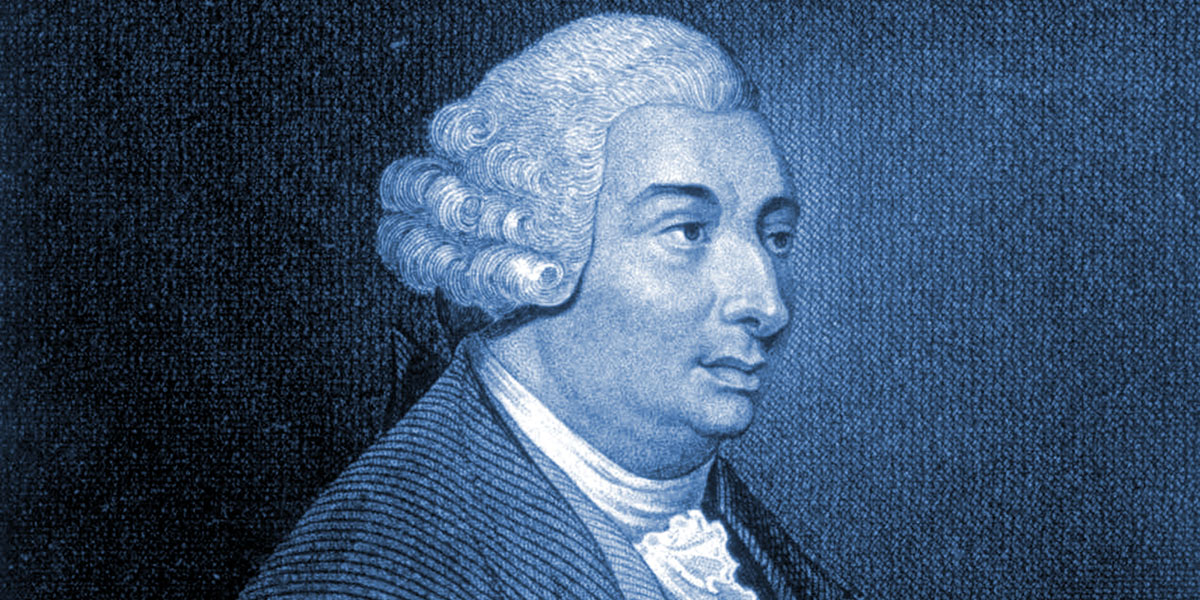
Across the street from the Scottish Parliament, on Calton Hill, is buried one of the greatest Brits who ever lived. David Hume was a pioneer of the Scottish Enlightenment – a philosophical movement which helped lay the foundations of classical liberalism, a way of thinking about society that would come to define the modern world. 

Hume was born when the United Kingdom was in its infancy, just four years after the 1707 Acts of Union which brought Scotland and England under the governance of one parliament. Over the next three hundred years, these newly united islands would advance and defend the principles of classical liberalism imparted by Hume and his contemporaries, perhaps more than anywhere. But the Union is now on its knees. On Thursday, just over a million Scottish voters turned out to fill Holyrood with candidates from pro-independence parties in what they hope will validate a second independence referendum. At this critical time, David Hume’s ideas are as important as ever, highlighting the contradictions at the heart of the independence movement. 

'Tis but a scratch!

'Tis but a scratch!

Last Thursday, working-class voters in England gave a resounding vote of confidence in Boris Johnson and an incumbent Tory government. Just a few miles north, though, here in Scotland, the Scottish Tories barely managed to hold on to their seat total.

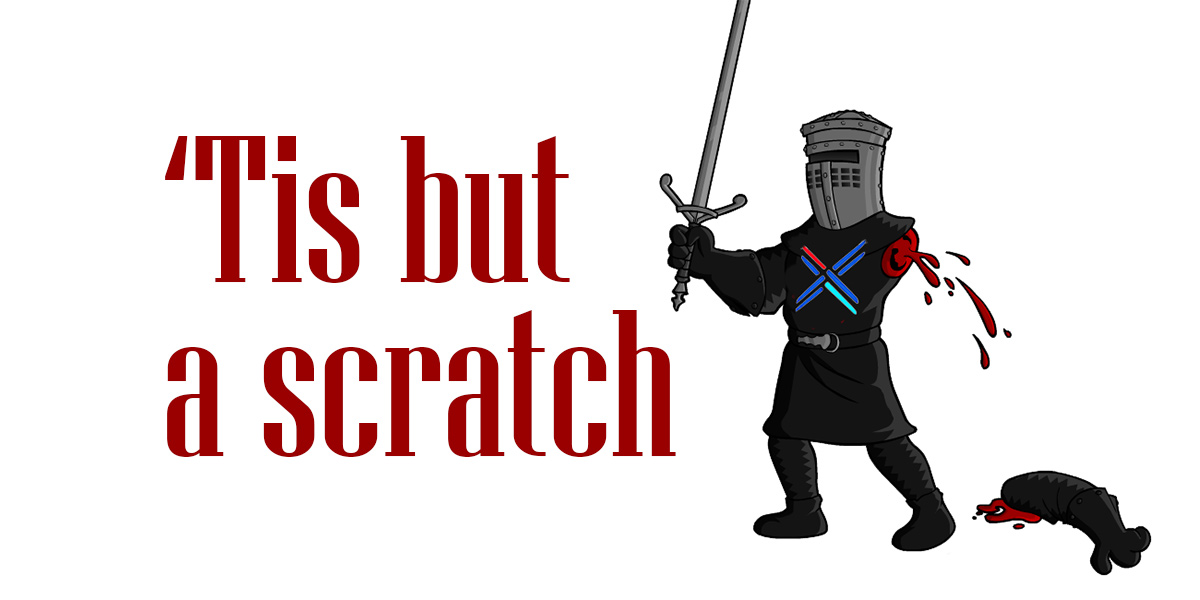
The Scottish Conservatives are valiantly trying to portray this as a win, but they’re like the Black Knight in Monty Python and the Holy Grail, on the ground with their legs and arms cut off, saying ‘tis but a scratch. (it seems The Holy Grail is replete with go-to-metaphors for Ross and his team). 

An empty vessel

An empty vessel

It's over, finally. After a few nail-biting days, we know our election results; the SNP has gained a seat, a single extra seat snuck in on the lists. It was stressful. I spent the two days glued to my computer, sweating and fretting for the future of our country. I groaned with pain at the loss of East Lothian and Ayr; I yelled with relief at Dumbarton so loud my wife thought I was dying, and I breathed a sigh of relief at Aberdeenshire West. Exhausted but relieved and determined to claim the head of whoever started the rumour that Jackie Baillie was 25 votes short in Dumbarton, as they have taken a fair few years off my heart.

Boot this Homer Simpson parliament

Boot this Homer Simpson parliament

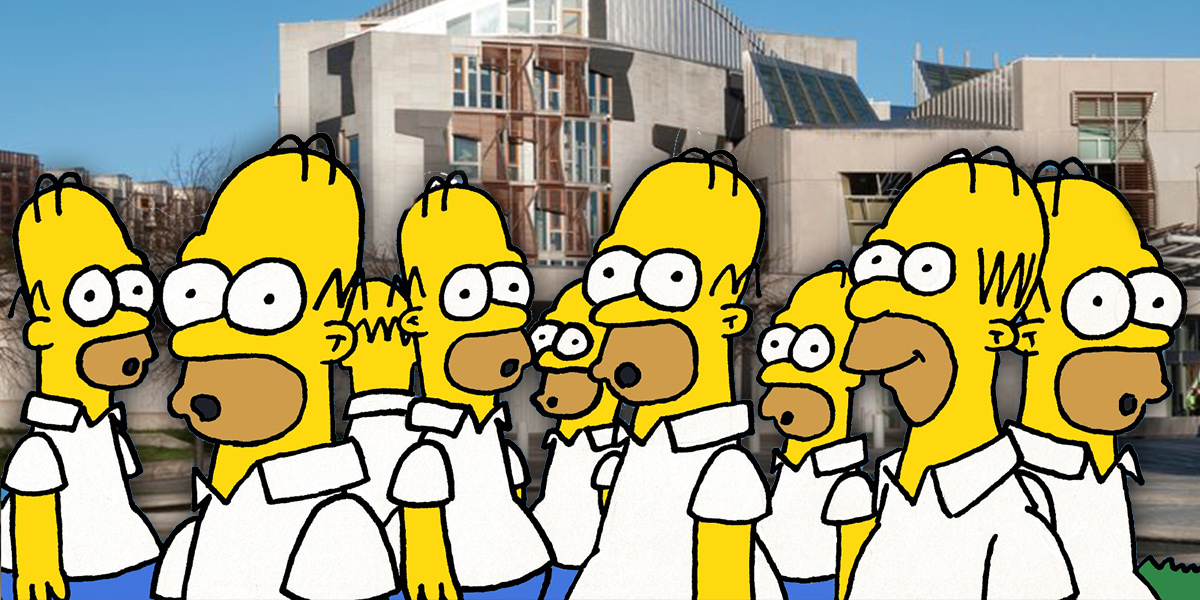
Holyrood is not a functioning parliament. In its place are 129 Homer Simpsons clinging to a donut. What Scotland needs more than anything, from COVID19 to unfinished hospitals to rusting ferries to fiscal blackholes is a turnaround team.

My background is in medicine and surgery but also in health economics and management. One of the biggest challenges for health managers is turning around a failing hospital, or several hospitals, or even a whole organisation. To turn around the failure we need to identify that the Scottish Parliament, not only the Scottish Government, is failing. That failure needs audited from top to bottom and skilled professionals brought in to both run the government and strip out the waste and the harm in Holyrood's culture. That needs experienced minds, clean hands of devolved politics, and the will and means to sack the board.

Cameron's folly

Cameron's folly

Hindsight is a wonderful thing, if at times a depressing one. It enables me to see now that one man has been responsible for the dire state that Scotland is in. His name is David Cameron. As British Prime Minister, he played a strong hand as if he were on the defensive, and has consigned us to Neverendumland. He did much the same over Brexit, but that’s another story.

Cameron took the SNP’s electoral win in 2011 at face value and did not consider its detail and ramifications. Indeed, the SNP won a majority of seats, a result which the – now widely disparaged – D’Hondt system had lumbered us with. But this ‘landslide victory’, as Alex Salmond the showman characterised it, was less than it seemed. It amounted to a win of 45 per cent of the votes on a turnout of 50 per cent. That is, 22.5 per cent of those entitled to vote supported the SNP. Further, only a mere half of eligible Scottish voters could be bothered to turn out to vote in an election for their own parliament, about whose creation there had been so much song and dance in the 1990s. The other half demonstrated their lack of interest with their feet.

Let's talk about George

Let's talk about George

As the election enters its final week, All For Unity has come under sustained attack from people on Twitter, led by Tory party activists, who, scared of losing list seats, have briefed candidates to launch personal attacks on George Galloway. 

To be honest, I was initially sceptical about George too. However, I had been awestruck by his debating skills in the US Senate, his passion in 2014 on the pro-UK side, and his commitment now to strategies that could beat the SNP and beat back the ugly and tiresome Nationalism that has brought Scotland to its knees. All of that is what got me talking with him about a new party to help break the stalemate.

The magic is gone

The magic is gone

It has not been a good election campaign for Nicola Sturgeon and the SNP. Whilst the Conservatives continue to have a robust and loyal following, and Labour is increasing their vote share, with an energetic leader who, perhaps, became the first politician in history to dance in the street and not make a fool of himself.

The SNP magic is gone. Dogged by damaging scandals and bitter feuds over the last six months, the party desperately needed a charismatic and energetic campaign, something they currently seem incapable of. The SNP, perhaps knowing they can no longer persuade fresh voters and scared by Alex Salmond’s Alba Party, have adopted a failing hardline core voter strategy.