Posts

The Lie That Won't Die

The Lie That Won't Die

Two weeks ago, Reverend Stu Campbell of Bath, aka Wings Over Scotland, proudly revealed an anniversary. It was 12 years, he breathlessly announced in a post called The Longest Lie, since he first debunked the notion that Scottish votes influence the outcome of UK General Elections. The last time it happened was 1964, he told his adoring followers.
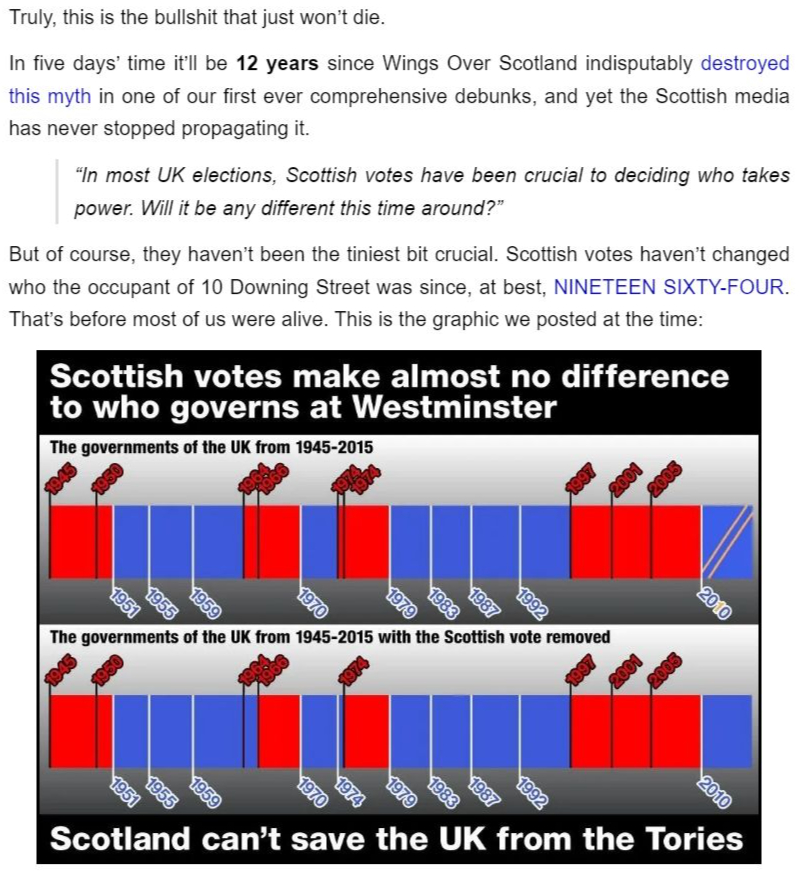
Quite a statistic. But is it true?

Not even remotely. As in, not only is it misleading, it is demonstrably false. In every sense. It contains not a scintilla of truth. Unfortunately, it has now entered the post-modernist Scottish political lexicon along with similar myths, such as the Nationalist whine that Scotland never gets the Westminster Government it votes for. Presumably, they mean apart from the 11 occasions post-WW2 when Scotland voted for the party that won the General Election and formed the Government?

Reasons to be cheerful

Reasons to be cheerful

It’s an often repeated theme of anti-UK nationalism (the SNP in Scotland especially) that there is a popular demand from the UK public to break up the UK. They bleat repeatedly in a monotone like sheep ‘The Union is dead’ in a sad attempt at creating the impression that the UK will inevitably break up. They have to maintain this fiction as any look at the objective, verifiable, empirical facts (data and statistical evidence) gives the conclusion that in ALL parts of the UK, a clear and often substantial majority of the public want to keep the UK together.

The Domino Effect

The Domino Effect

The Domino Effect was a dominant theory (mostly in the US) during the Cold War period – when anxiety about Communism’s real intentions in Europe and the wider world was at its height – that as one country became controlled by Communism, then inevitably, by a process of contamination, states bordering it would also fall under its domination, like toppling dominoes in a row. This theory was the basis of US and other countries’ foreign policy and helped fuel armed conflicts in the post-1945 period. 

Sturgeon’s leadership failures brought to book

Sturgeon’s leadership failures brought to book

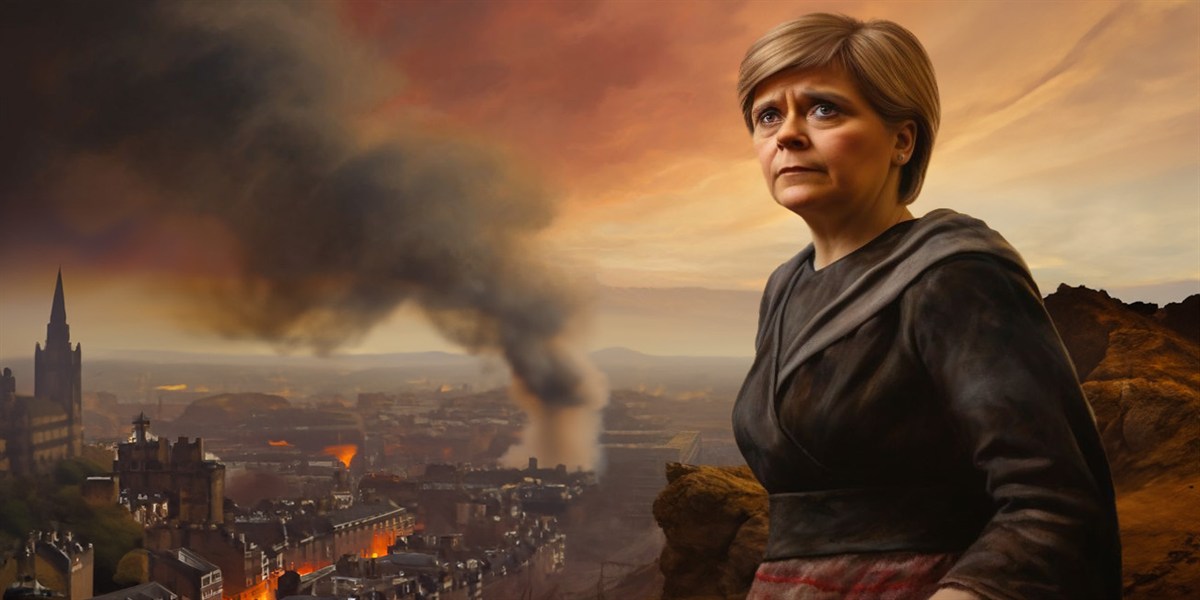
In his new book on post-war European leaders, Tom Gallagher assesses Nicola Sturgeon's disastrous legacy, and how her failure provides an insight into Europe’s Leadership Famine.

Nicola Sturgeon definitely merits a chapter in a book on European leadership. It isn’t because she left Scotland a better place than she found it or because under her the independence cause flourished. Neither thing happened. Indeed, many of the 12,000 people who crowded into Scotland’s main events venue, the Hydro in Glasgow on 22 November 2014 to hail her emergence as First Minister of devolved Scotland and leader of the Scottish National Party (SNP) would today bitterly assail her as a fraud who had duped them.

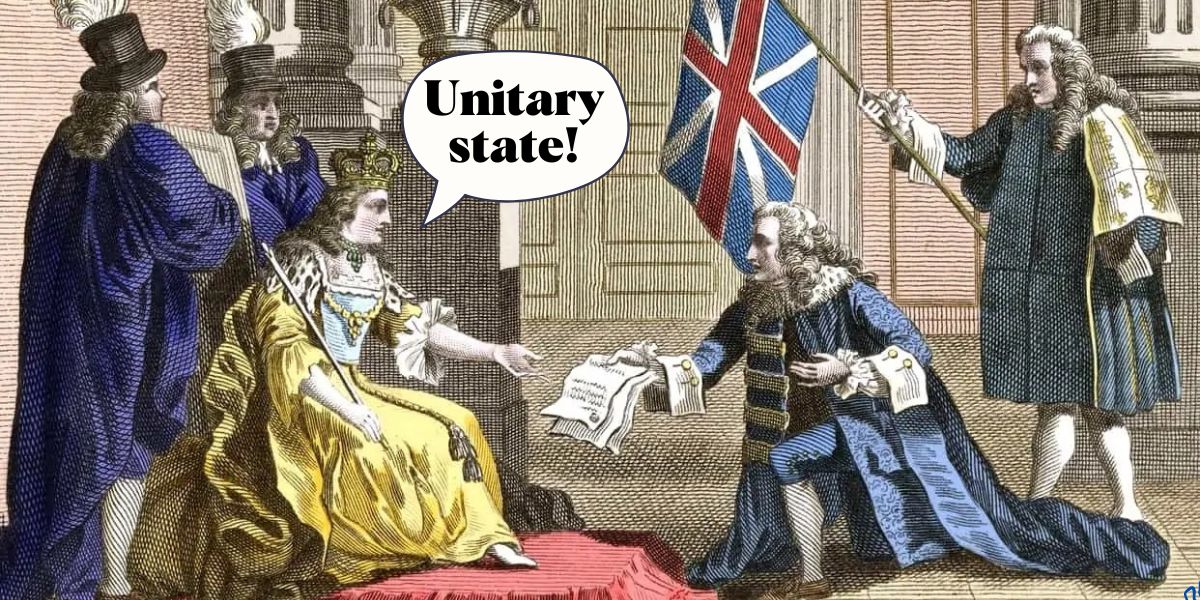
It is written: Westminster is the UK’s sovereign parliament

It is written: Westminster is the UK’s sovereign parliament

In the past week, the SNP has been trying to recapture the narrative, away from Sturgeon’s criminal investigation, to constitutional issues. Humza Yousaf has proposed that an independent Scotland adopts a ‘written constitution’:

Westminster has already been able to undermine the devolution settlement, override decisions made by an elected Scottish Parliament...In future, Westminster sovereignty could even allow the UK parliament to repeal devolution through nothing other than a simple majority vote.

Federalism: The nationalist wolf in sheep's clothing

Federalism: The nationalist wolf in sheep's clothing

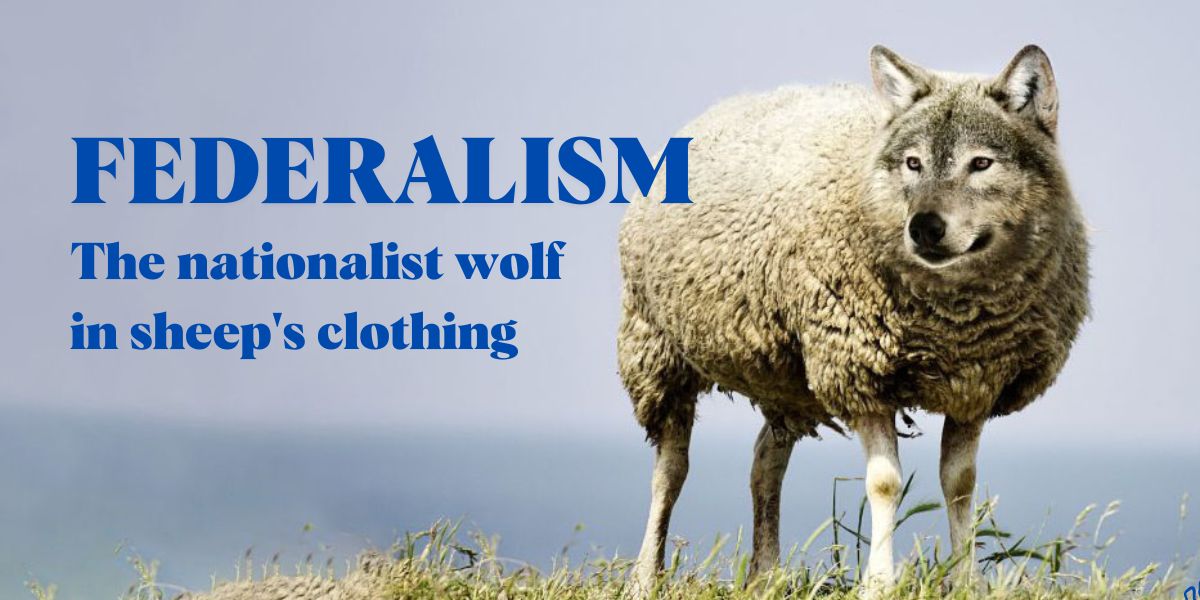
It seems no matter what constitutional problems the UK has, someone will always propose federalism as a solution. But federalism isn't the benign cuddly sheep it first appears to be. It's the nationalist wolf in disguise, ready to divide and devour the UK. Federalism, like all attempts to appease nationalism, will only further aid the fragmentation of the constitutional cohesion of our country, and should be opposed by all those who want to maintain its integrity.

Reform or Abolish?

Reform or Abolish?

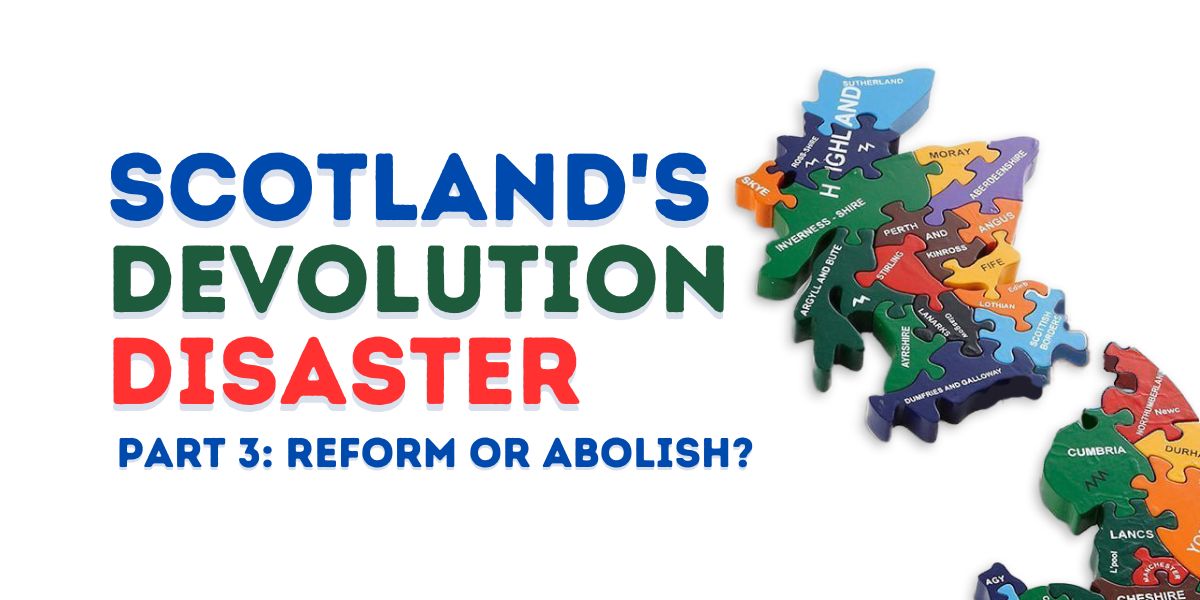
The final part of The Majority's three-part series on the failure of Scottish Devolution and the options to reform or abolish the Scottish Parliament.

Part 1 – How we got here

Part 2 – Power Grabs, Waste & Scandal


The first part of this series covered how legislative devolution grew from a concept into the reality of the Scottish Assembly, and talked about how, rather than acting as a bulwark against nationalism, it has become a UK Government-funded vehicle for nationalism and constitutional division.

Power Grabs, Waste & Scandal

Power Grabs, Waste & Scandal

Part 2 of a three-part series on the failure of Scottish Devolution and the options to reform or abolish the Scottish Parliament.

Part 1 – How did we got here?


Before a system can be fixed or abolished, we need a clear understanding of the problems and issues of the current system of Legislative Devolution:

  • Constitutional conflict
  • Centralisation
  • Excessive spending
  • Lack of accountability

Constitutional Power Grabs

It is a well-known fact that political organisations always aim to expand their power. In fact, devolution was set up, in principle, as a way to stop evermore power accruing in Westminster. What has actually happened, though, is that power has been hoarded in Edinburgh at the expense of Scotland’s local authorities, while the Scottish Government has tried to grab as much power as it can from Westminster, often aided by politicians who are either unaware or uncaring of the problems that would produce.

Scotland's devolution disaster

Scotland's devolution disaster

It’s been 25 years since the devolution experiment was inflicted on Scotland, and the result is an unspeakable disaster. It’s a disaster because The Scottish Parliament, which was set up to stop Scottish Nationalism, is now being abused by the SNP to promote a separatist agenda, while Scotland’s services decline daily and scandal mounts up. And it is ‘unspeakable’ because few want to discuss whether the source problem is devolution itself, even its natural opponents.

After the earthquake, a tsunami

After the earthquake, a tsunami

It’s said that before a tsunami strikes there are major warning signs to look out for that should alert the public to the forthcoming catastrophe. Warning signs such as an earthquake at sea, or the tide suddenly going out, are usually enough to galvanise the inhabitants of neighbouring coastal towns to immediately head for the high ground.

Political tsunamis have striking similarities to the real thing. For example, there were many early warning signs before the 2015 General Election that alerted all pro-UK parties in Scotland to the very real possibility that they were going to be swept away by a gigantic nationalist tidal wave.