
Devolution

There is no ‘Union Dividend’

There is no ‘Union Dividend’

So called pro-UK politicians from both the Conservatives and Labour often trumpet the "Union dividend" — the extra billions Scotland receives from the United Kingdom — as proof that staying in the UK benefits ordinary Scots. On paper, the numbers seem impressive: according to the Government Expenditure and Revenue Scotland (GERS) 2024–25 report, Scotland receives £2,669 more per person in public spending than the UK average.

But in reality, this dividend is wasted as under the SNP, Scotland’s extra funding is being squandered on a bloated, inefficient, and politically motivated public sector, while schools, hospitals, and local services continue to decline. Ordinary Scots see none of the supposed benefit.
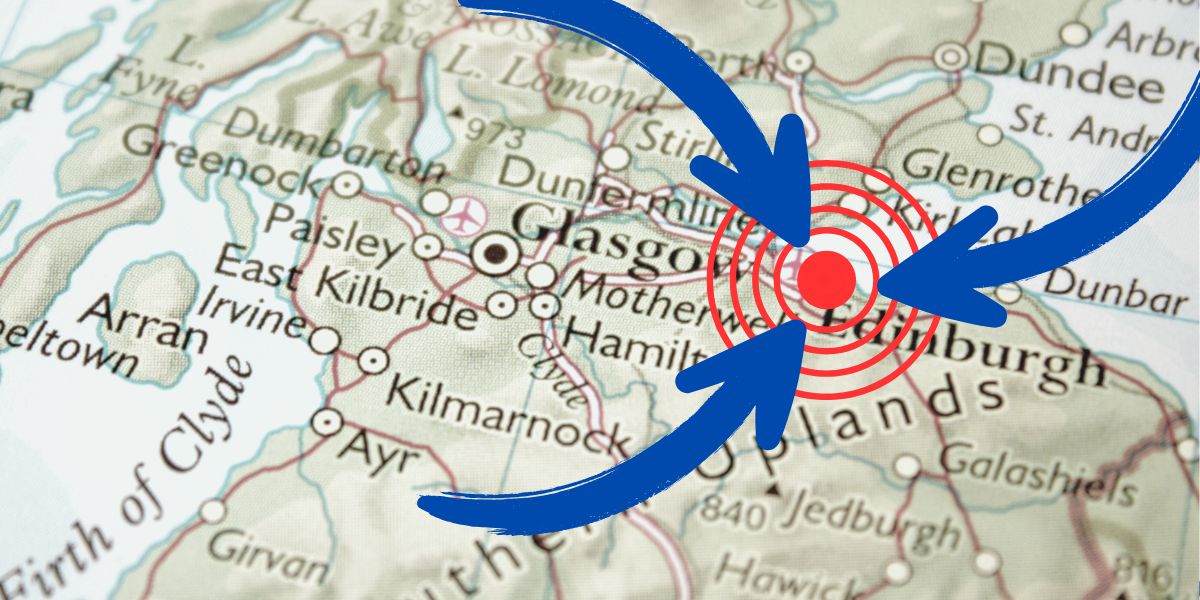

Pincer Movement

Pincer Movement

The United Kingdom faces a persistent challenge from separatist movements, particularly in Scotland, where the Scottish National Party (SNP) has pursued independence with unrelenting focus. Despite the intentions behind devolution, the existence of devolved legislatures like Holyrood has amplified the separatist agenda rather than diminished it. To secure the UK, a pragmatic dual strategy—a short-term defense and a long-term solution—is required.

The Failure of Devolution to Quell Separatism

When devolution was introduced, proponents like Labour politician George Robertson claimed it would "kill nationalism stone dead." Instead, the opposite has occurred. Over the past 26 years, Holyrood has provided the SNP with a powerful platform to dominate Scottish politics, displacing pro-UK parties like Labour and the Liberal Democrats. Far from reducing separatist sentiment, devolution has given the SNP a megaphone to advance their singular goal: breaking up the UK.

We are NOT ‘stuck with’ devolution

We are NOT ‘stuck with’ devolution

Today marks the 25th anniversary of the first session of The Scottish Parliament. As expected, a host of insiders, including Scottish Labour politicians, are saying they are proud of what has been achieved, while Scots wonder if those politicians – who are almost all receiving a salary from the Scottish Parliament – have somehow missed the past 25 years.

So let’s cast our minds back to 1997 and ask the question that is not being asked: What if legislative devolution was not part of New Labour’s manifesto, and it never happened?

Reasons to be cheerful

Reasons to be cheerful

It’s an often repeated theme of anti-UK nationalism (the SNP in Scotland especially) that there is a popular demand from the UK public to break up the UK. They bleat repeatedly in a monotone like sheep ‘The Union is dead’ in a sad attempt at creating the impression that the UK will inevitably break up. They have to maintain this fiction as any look at the objective, verifiable, empirical facts (data and statistical evidence) gives the conclusion that in ALL parts of the UK, a clear and often substantial majority of the public want to keep the UK together.

Reform or Abolish?

Reform or Abolish?

The final part of The Majority's three-part series on the failure of Scottish Devolution and the options to reform or abolish the Scottish Parliament.

Part 1 – How we got here

Part 2 – Power Grabs, Waste & Scandal


The first part of this series covered how legislative devolution grew from a concept into the reality of the Scottish Assembly, and talked about how, rather than acting as a bulwark against nationalism, it has become a UK Government-funded vehicle for nationalism and constitutional division.

Power Grabs, Waste & Scandal

Power Grabs, Waste & Scandal

Part 2 of a three-part series on the failure of Scottish Devolution and the options to reform or abolish the Scottish Parliament.

Part 1 – How did we got here?


Before a system can be fixed or abolished, we need a clear understanding of the problems and issues of the current system of Legislative Devolution:

  • Constitutional conflict
  • Centralisation
  • Excessive spending
  • Lack of accountability

Constitutional Power Grabs

It is a well-known fact that political organisations always aim to expand their power. In fact, devolution was set up, in principle, as a way to stop evermore power accruing in Westminster. What has actually happened, though, is that power has been hoarded in Edinburgh at the expense of Scotland’s local authorities, while the Scottish Government has tried to grab as much power as it can from Westminster, often aided by politicians who are either unaware or uncaring of the problems that would produce.

Scotland's devolution disaster

Scotland's devolution disaster

It’s been 25 years since the devolution experiment was inflicted on Scotland, and the result is an unspeakable disaster. It’s a disaster because The Scottish Parliament, which was set up to stop Scottish Nationalism, is now being abused by the SNP to promote a separatist agenda, while Scotland’s services decline daily and scandal mounts up. And it is ‘unspeakable’ because few want to discuss whether the source problem is devolution itself, even its natural opponents.

John Mortimer: It's time to abolish Holyrood

John Mortimer: It's time to abolish Holyrood

With six months to go to the Holyrood elections, Mark Devlin talks to John Mortimer, of the Abolish The Scottish Parliament Party, about the party’s progress and goals. 

What is the aim of the party?

The party’s flagship policy, of course, is to abolish the Scottish Parliament, which we consider to be a divisive waste of money. We believe that the £100 million running costs each year would be better spent on health and education, and that the powers and funding that the Scottish Government has centralised in Edinburgh, should be returned back to local authorities. The grounds of the Parliament building should be turned into homes for veterans.

Devolution has failed: Abolish Holyrood

Devolution has failed: Abolish Holyrood

How much does it cost to change a lightbulb at Holyrood?

A few quid perhaps? Maybe ten or twenty quid at a stretch? No… in fact it turns out it costs £357 to change a lightbulb at the Scottish parliament building. Some £1.75 Million was spent on upgrading lights in the devolved assemblies’ debating chamber in 2016-7, working out at an astonishing £357 apiece.

That same year, costs ranged from £25.6 Million in staff salaries, to £15.8 Million in parliamentary expenses. All in all, the total bill for the devolved assembly came in at a whopping £95,600,000. Perhaps such largesse should not be surprising; after all the ugly carbuncle that is this Scottish parliament building famously came in at a total cost of £414,000,000 to construct; roughly ten times over budget and three years late, to boot.